 -64%
-64%Age of Empires IV: Digital Deluxe Edition
21.54 $
 PCKeys for PC
 PlayStationKeys for PlayStation
 XboxKeys for Xbox
 NintendoKeys for NintendoPCKeys for PCPlayStationKeys for PlayStationXboxKeys for XboxNintendoKeys for Nintendo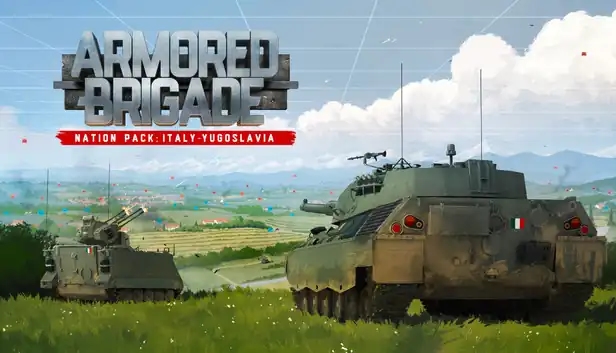
Following World War II, Italy grappled with the stigma of defeat and a legacy of underwhelming military performance, fostering widespread aversion to war—a sentiment formally enshrined in the Constitution. Nevertheless, the formation of NATO prompted a rapid reorganization and expansion of the Italian Armed Forces within a new, collective defense framework.
Read moreFollowing World War II, Italy grappled with the stigma of defeat and a legacy of underwhelming military performance, fostering widespread aversion to war—a sentiment formally enshrined in the Constitution. Nevertheless, the formation of NATO prompted a rapid reorganization and expansion of the Italian Armed Forces within a new, collective defense framework. Positioned as a critical bulwark in the Mediterranean, Italy braced for a potential invasion from the east, most likely through Yugoslavia. Despite this, the nation’s strategic culture—blending realpolitik with strong pacifist leanings—continued to shape its military posture, often resulting in constrained capabilities and cautious planning.
At first glance, the Italian Army may appear less equipped than other NATO forces. Yet this impression overlooks its strategic context: tasked with defending a rugged, mountainous eastern frontier bristling with fortifications. Unit quality varied considerably across the force—elite units like the renowned Alpini mountain troops or select mechanized and armored brigades were well-trained and better supplied. Players may still feel outgunned in places, making it essential to back infantry, armor, and mechanized units with robust support elements. Success hinges on agility, smart use of terrain, and flanking maneuvers—rewarding a dynamic, cautious, and terrain-aware approach.
On the opposing side stood Yugoslavia—a nation caught between NATO and the Soviet bloc, with the constant threat of invasion shaping its military doctrine. The 1968 Warsaw Pact intervention in Czechoslovakia reinforced Yugoslav fears, driving a defense strategy rooted in mass mobilization, decentralized resistance, and hybrid warfare. Drawing on the legacy of Partisan guerrilla tactics, the Yugoslav People's Army was designed to wage a prolonged conventional defense while mobilizing reserves and the civilian population. Local Territorial Defense units, equipped with light anti-personnel and anti-armor weapons, would fight alongside regular forces, maximizing mobility and local knowledge.
Because achieving parity in quality or quantity with potential adversaries was unrealistic, Yugoslavia prioritized efficiency—rarely discarding even outdated equipment if it could serve a purpose. This pragmatic resourcefulness is mirrored in the game’s units and tactics. As a result, Yugoslavia fields a balanced, adaptable military that performs reliably across all domains, though rarely dominating in any. A combined arms approach is key when facing more advanced foes. While infantry forms the backbone—highly resilient, low-logistics, and widespread—its armored and mechanized forces remain fully capable of posing serious challenges to any enemy.
Not specified